Habit Breaking vs Formation: Key Differences

Comparative overview of the psychological and neurobiological mechanisms involved in forming new habits and breaking existing ones

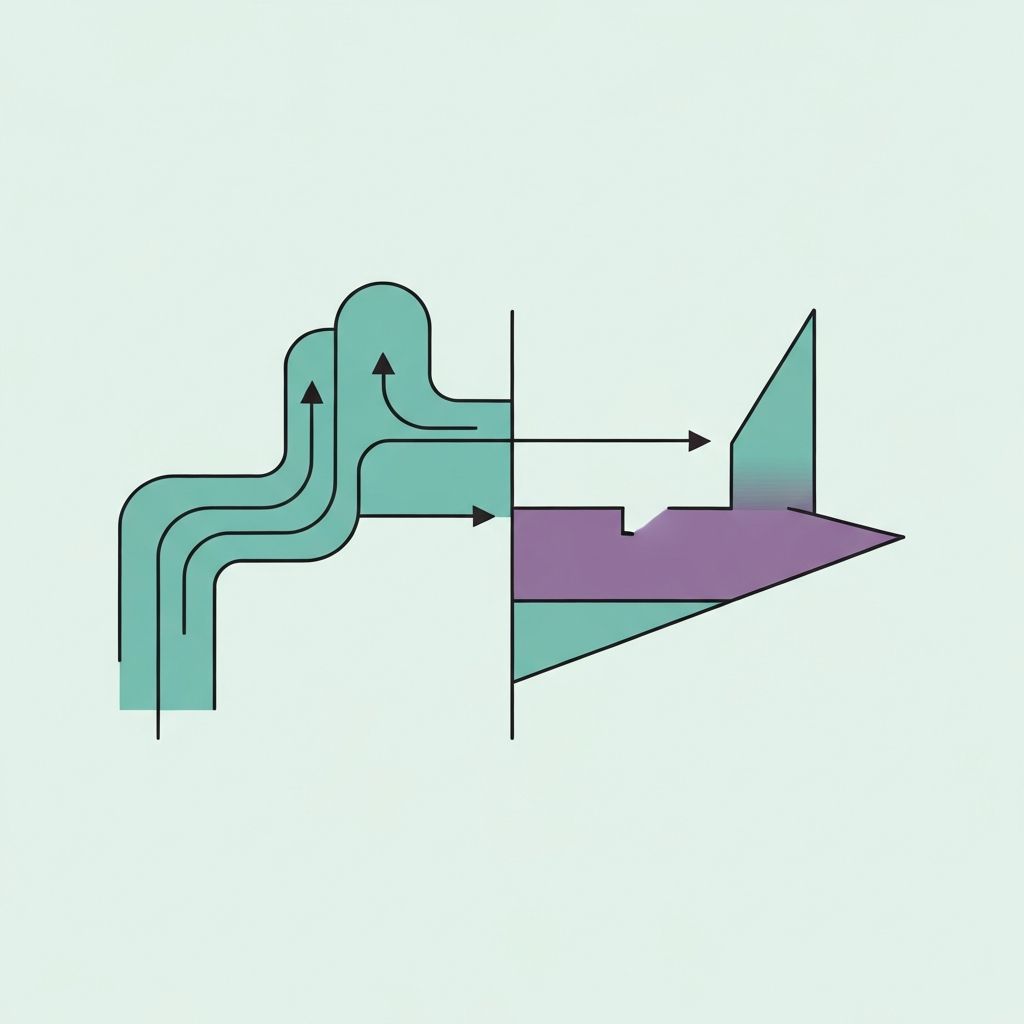
Diverging paths illustration

Educational Content Only: This article presents general information about habit formation and habit change psychology. It does not constitute personalized advice, treatment guidance, or a program of any kind. Consult qualified professionals for individualized recommendations.

Formation vs. Breaking: Fundamental Differences

Habit formation and habit breaking involve different psychological and neurobiological processes. While often discussed as inverse processes, they operate through distinct mechanisms. Understanding these differences provides insight into why breaking established habits proves more challenging than forming new ones.

Formation involves creating new neural associations, while breaking involves suppressing or replacing existing associations. These are fundamentally different operations, each with distinct neurobiological signatures and practical implications.

Formation: Building New Associations

Habit formation involves creating new neural associations between cues and routines, and between routines and rewards. In early formation stages, these associations are labile—unstable and relatively easy to disrupt or modify. Repeated practice and consistent contexts gradually stabilize these associations.

In formation, there is no competing habit—no established association to overcome. The person is learning something new. The neural circuits supporting the behavior are being created rather than being modified against existing patterns.

Formation benefits from consistent practice in stable contexts. Repetition strengthens associations; context consistency supports consolidation. New habits can be accelerated through frequent, undisrupted practice. The brain "learns" the behavior efficiently when conditions support consolidated learning.

Habit loop diagram

Breaking: Suppressing Established Associations

Habit breaking involves suppressing or replacing established neural associations. The neural pathways supporting the habitual behavior already exist and are reinforced through years of practice. These consolidated pathways do not simply disappear—they remain in the brain.

Breaking an established habit typically requires either removing the cue (avoiding contexts triggering the habit), changing the routine response (performing a different behavior when cued), or altering reward contingencies (changing what follows the behavior).

However, even when habitual responses are successfully suppressed, the underlying neural circuits often remain intact. This is why people frequently report that old habits "come back" when facing stress, returning to familiar contexts, or when attention is diverted from behavioral suppression. The neural circuitry supporting the habit persists even when the behavior is not expressed.

Neurobiological Basis of Formation

During habit formation, neural circuits are progressively recruited and consolidated. Initial learning activates multiple brain regions as the person consciously attends to learning. With practice, activation becomes more focused and automatic.

Synaptic strengthening occurs through molecular processes supporting learned associations. The connections between neurons in habit-supporting circuits are gradually reinforced. This synaptic strengthening is facilitated by neurochemical states supporting learning—attention, motivation, and reward processing.

Formation-supporting factors include dopamine release (reinforcement of learned associations), neural growth factors (supporting structural changes), and repeated activation of neural circuits (consolidating associations). The brain is essentially building new hardware—creating neural circuits supporting new behaviors.

Neural connections diagram

Neurobiological Basis of Breaking

Breaking habits involves recruiting prefrontal cortex regions supporting inhibitory control—the neural systems responsible for suppressing automatic responses. This prefrontal control requires active cognitive resources and effort, particularly in early stages of behavior change.

Inhibitory control operates through suppression rather than replacement. The habitual neural circuits remain; they are actively suppressed when activated. This suppression requires ongoing cognitive effort. When cognitive resources are depleted—through stress, fatigue, or distraction—suppression may fail and habitual responses may emerge.

This explains why breaking established habits is often more effortful than forming new ones: formation involves building new circuits while habitual responses are absent; breaking involves recruiting inhibitory control against existing circuits. The energetic demand of ongoing suppression can eventually lead to behavioral "slips" where automatic responses break through suppression.

Time Course: Formation vs. Breaking

Habit formation typically requires weeks to months of consistent practice, depending on practice frequency, context consistency, and reward strength. However, the time course varies substantially across individuals and contexts.

Habit breaking generally requires longer than formation. Established habits show persistence even when suppressed. Research suggests that breaking established habits typically requires sustained effort over extended periods. Even after months of suppression, individuals often report vulnerability to relapse.

Critically, the asymmetry between formation and breaking timescales reflects the neurobiological difference: circuits supporting new habits are being created from scratch; circuits supporting habitual responses are already consolidated. Creating new circuits is generally faster than overcoming established ones.

Role of Context in Formation vs. Breaking

In formation, consistent context supports habit consolidation. Repeating new behaviors in the same context facilitates learning. Stable contexts create predictable cue-routine associations that strengthen through repetition.

In breaking, context change can disrupt established habits. When the contexts triggering habitual responses change significantly, the cues activating automatic responses may no longer be present. Without familiar triggers, the habitual response may not activate, even without conscious suppression effort.

This context-dependence explains why environmental change can facilitate habit breaking: moving to a new location, changing routines, or altering social contexts can remove habitual cues. Conversely, returning to contexts where habits formed often reactivates those habits, even after periods of suppression.

Environmental context

Vulnerability to Relapse

Relapse—return to habitual behaviors after a period of suppression—is a common phenomenon in habit change attempts. Relapse occurs because the neural circuits supporting the habit persist even when the behavior is suppressed.

Vulnerability to relapse varies across situations. High-risk situations include exposure to habitual cues (returning to familiar contexts), emotional stress (which can override inhibitory control), and fatigue (which depletes cognitive resources needed for suppression). In these situations, habitual responses may break through suppression.

Understanding relapse as a neurobiological phenomenon rather than a failure of willpower provides important perspective: established neural circuits supporting habits do not simply disappear through suppression. Relapse represents the reactivation of persistent neural circuitry, not a character flaw or motivational failure. This perspective supports realistic expectations about behavior change challenges.

Implications for Understanding Change

The distinction between formation and breaking has practical implications. Forming new habits requires consistency and stable contexts. Practicing new behaviors frequently, in predictable circumstances, supports habit formation.

Breaking established habits requires either preventing cue exposure, actively suppressing habitual responses, or replacing habits with alternative behaviors. None of these strategies is universally easy or effective. Success often depends on which strategy is appropriate for particular habit and circumstance.

Most importantly, understanding the neurobiological differences illuminates that habit breaking is generally more challenging than habit formation. This reality aligns with common experience: new behaviors feel effortful initially but become easier; established behaviors feel effortless but are difficult to suppress. Neurobiologically, this reflects the difference between creating new circuits and overcoming established ones.

Continue Exploring

Return to our blog index to explore other articles on habit formation science.

View All Articles